Mold doesn't need humid air, just trapped moisture. Why professional drying after any water event matters, especially in our wet climate.
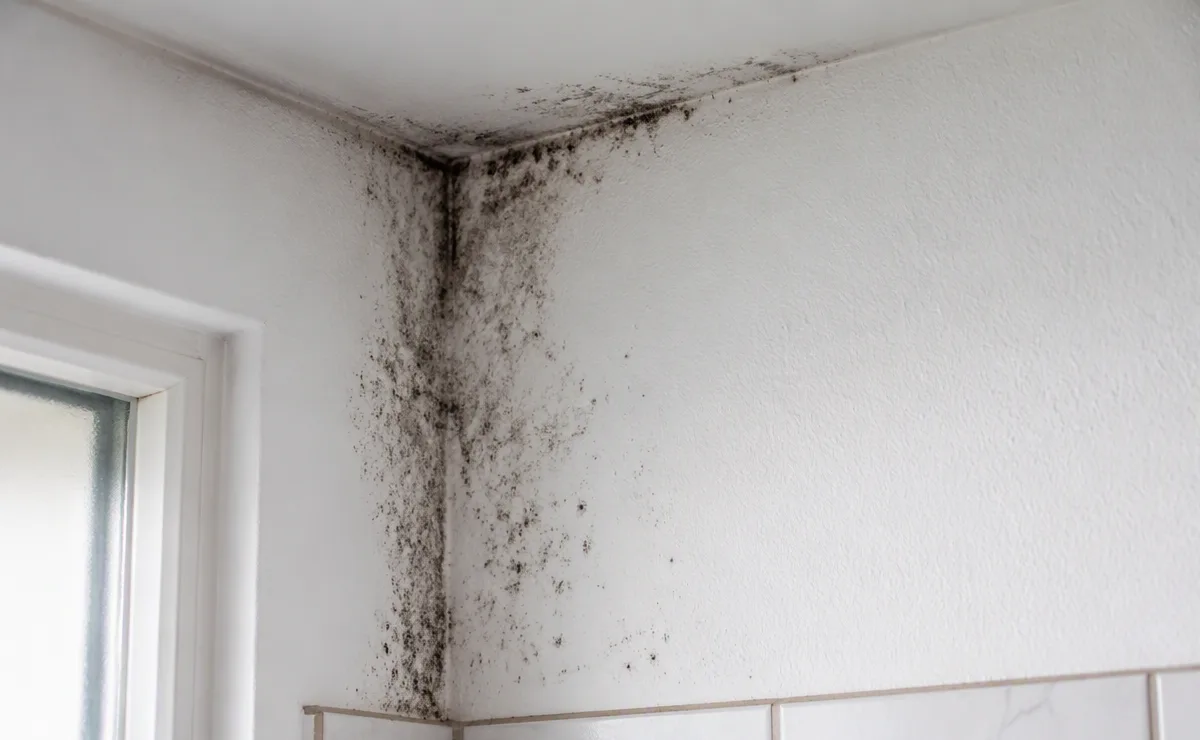
"It's just the Oregon damp — it'll dry out when summer comes." It's one of the most common things homeowners tell us, and one of the most costly misconceptions. Salem's long wet season doesn't just make mold possible — months of rain and cool, gray weather give it exactly what it wants: moisture that never quite goes away.
After a leak, a flood, or a burst pipe, that moisture ends up trapped inside walls and under floors — and in a season when nothing outside fully dries, nothing inside does either. There, in the dark and still air, mold can take hold within a day or two.
Mold spores are always present in the air, indoors and out. They're harmless until they land somewhere that gives them what they need to grow. That short list is: moisture, a food source, and a comfortable temperature. In a home, the food source is everywhere — drywall paper, wood framing, insulation backing, carpet, and dust all qualify. Indoor temperatures are almost always in the range mold likes.
That leaves moisture as the only missing ingredient, and it's the only one you can really control. This is the key point people miss: the humidity of the air in the room barely matters if there's a wet material for mold to feed on. A soaked wall cavity is a perfect environment for mold even when the thermostat says the house is bone dry.
The problem in our climate isn't the air — it's the moisture that gets sealed inside the structure and can't escape. Several everyday events leave water where you can't see it:
Our wet climate makes the mold risk worse in one important way: it makes people complacent. When the rain runs from fall to late spring, homeowners get used to damp — so a small leak gets wiped up and forgotten, or a flooded room is fanned for an afternoon and declared "good enough."
Inside a wall or under a floor, though, there's little airflow and no sunlight, so trapped water lingers far longer than the surface suggests. By the time a musty smell or a dark spot appears, mold has usually been growing for a while. Mold can begin colonizing wet materials within 24 to 48 hours — long before anyone thinks to look.
Watch for a persistent musty or earthy odor, dark spotting on drywall or around windows, peeling paint or warped trim near a past leak, and worsening allergy or respiratory symptoms that ease when you leave the house. Any of these after a water event is a reason to look closer rather than wait.
The single most effective way to prevent mold in a Salem home is to dry any water event completely and quickly — not just the surface, but the materials and cavities the water reached. That's more than a fan and an open window can do.
If mold has already appeared, the fix is to address the moisture source first and remove the growth safely, not just wipe it away. We connect you with local pros for Mold Remediation to contain and remove existing mold, and for Structural Drying and Water Extraction after any leak or flood so trapped moisture never gets the chance to feed it.
Wet climate or not, mold is a moisture problem — and moisture is exactly what a proper dry-out removes. Treat every water event as a mold risk, act on it fast, and Oregon's rain won't get the last word.
Head back to our blog for more local guides, or explore our residential services hub. Think you may have mold? Reach out through our contact page.
We answer 24/7 and connect you with a local Salem pro who can be on the way fast — with a clear, no-obligation assessment first.